Hoptroff Wrapped: 2025 in Review

The World Runs on Time
Every digital transaction, every data point, every system handshake depends on clocks that agree. When systems are in sync, financial markets run smoothly and data in every sector maintains its integrity. But when clocks are off by extremely small fractions of a second, logs become meaningless. Without trusted data, you cannot reconcile what happened when.
Time is the invisible foundation holding our digital world economy together. In 2025, that foundation came under serious pressure.
A Tumultuous Year
2025 witnessed escalating cyber warfare and increasingly brazen attacks on critical infrastructure. As geopolitical tensions intensified, GNSS interference emerged as a weapon of choice, disrupting systems that nations and industries had considered untouchable.
GPS jamming and spoofing incidents surged around the world. EU Commission President Ursula von der Leyen's plane was forced to land using paper maps after suspected Russian GPS jamming disrupted navigation systems during her tour of EU states.
Sweden accused Russia of being behind a significant rise in GPS signal-jamming incidents recorded over the Baltic Sea, with almost daily disruptions affecting air-traffic control systems and forcing flight diversions.
In India, the scale of the problem became undeniable. India's Civil Aviation Ministry confirmed that seven major airports experienced regular GNSS interference: Delhi, Mumbai, Kolkata, Bangalore, Chennai, Hyderabad, and Amritsar. When pilots can’t rely on satellite navigation, doing so could be catastrophic.
These weren't technical failures. Instead, deliberate acts are showing us the uncomfortable reality that GPS signals are vulnerable, manipulable, and increasingly targeted. When a £15 jammer purchased online can disrupt systems worth billions, the fragility becomes impossible to ignore.
The consequences extend well beyond navigation. Similar disruptions affect the financial markets but don’t get the same level of public-facing press. In organisations around the world, teams are quietly fighting GPS disruptions on time. Any system that relies on GPS clock synchronisation, including trading infrastructure, telecommunications networks, power grids, and data centres, is vulnerable. Spoofing or jamming will cause them to fail to tell the time. And everything that depends on it can begin to fail too.
Regulators are responding with increased urgency. The EU's Digital Operational Resilience Act (DORA) came into force for financial institutions, requiring resilient timing sources with no single points of failure. Executive Order 13905 mandated strengthening against GPS risks, with the same coming into play in Europe via the EU Council Advisory 9188/1/25. The UK's Cyber Security and Resilience Bill entered Parliament, addressing similar vulnerabilities and the importance of appropriate incident-reporting systems. And NIS 2 extended these requirements throughout Europe's essential services sectors.
The regulatory message was clear: relying solely on GPS for timing is no longer acceptable, and organisations need to pay rigorous attention to what systems they have in place to help identify and report on attacks on their systems.
Enhancing Our Multi-Layered Resilience
Hoptroff’s response in 2025 focused on what we've long believed is essential. We provide Complementary PNT architecture that combines satellite and terrestrial time feeds, all network-delivered. This approach provides genuine resilience because when one source is compromised, others maintain accuracy and traceability.
But resilience only matters if it works where organisations actually operate. Real infrastructure isn’t one size fits all, and our timing solutions must meet our clients where they are, whether it’s on-premise hardware, private data centres, hybrid cloud deployments across major cloud providers.
We've long integrated terrestrial timing feeds from authoritative time sources, including NIST in the United States and RISE in Sweden. In 2025, building on our Innovate UK-funded partnership, we added NPLTime® from the UK's National Physical Laboratory to complete a truly diverse, tripartite terrestrial architecture. Together, these three terrestrial sources form a deliberately diverse architecture designed to eliminate single points of failure.
The results from our 2025 testing and evaluation proved our approach works at scale. We achieved 9-30 microsecond UTC-traceable synchronisation across approximately 5,000 kilometres (roughly the distance from London to New York) using data centre fabric infrastructure. For organisations with global operations, we’re enabling microsecond precision across continents without compromising on traceability.
In multi-cloud and hybrid environments, we validated sub-50 microsecond timing across AWS, Azure and on-premise systems. This level of precision matters because it provides the headroom needed for even the strictest regulatory compliance (MiFID II mandates 100 microseconds for high-frequency trading). Even across distributed databases and transaction systems, Hoptroff enables data ordering across every compute platform.
Most significantly, we operationalised a six-source timing architecture combining three GNSS feeds with three terrestrial sources. This makes Hoptroff the only provider in the world capable of delivering terrestrial time directly into the cloud—not as a future capability, but integrated into our production network and serving clients who cannot depend on GPS alone.
For financial institutions, critical infrastructure, and data centres hosting the digital economy, our timing innovation is not to be underestimated. Trusted time from national laboratories worldwide, delivered with the flexibility that modern distributed infrastructure demands, through a plug-and-play solution.
Strategic Partnerships
Our recent partnership with London Stock Exchange Group brings Hoptroff's timing solutions to LSEG’s global ecosystem of financial institutions, providing the compliant, resilient timing that capital markets require.
Our collaboration with IBM deepened throughout the year, focused on delivering precision timing across cloud and hybrid infrastructure.
Across the data centre sector, we saw growing recognition that timing deserves the same attention as power, cooling, and connectivity. Major providers understand the need to deliver timing solutions to their customers who work seamlessly across distributed environments, but don’t want the headache of designing, building, and maintaining a complete timing infrastructure. Hoptroff is delivering exactly that capability efficiently, without customer overhead.
International Recognition
Our work with the US Department of Transportation progressed throughout the year, with testing at the Volpe Test Lab demonstrating our capabilities for critical infrastructure applications. As the US government rethinks its approach to national timing infrastructure to address GPS vulnerabilities, Hoptroff's technology and approach are part of that essential conversation.
Furthermore, we undertook CMMC Level 1 certification to meet the rigorous cybersecurity standards required for US defense and government contracts. This validates our ability to protect sensitive data with robust cybersecurity protocols.
Hoptroff was highly commended in the Made in the UK, Sold to the World awards by the UK Department for Business and Trade, recognising that British innovation in precision timing is addressing genuinely global infrastructure challenges.
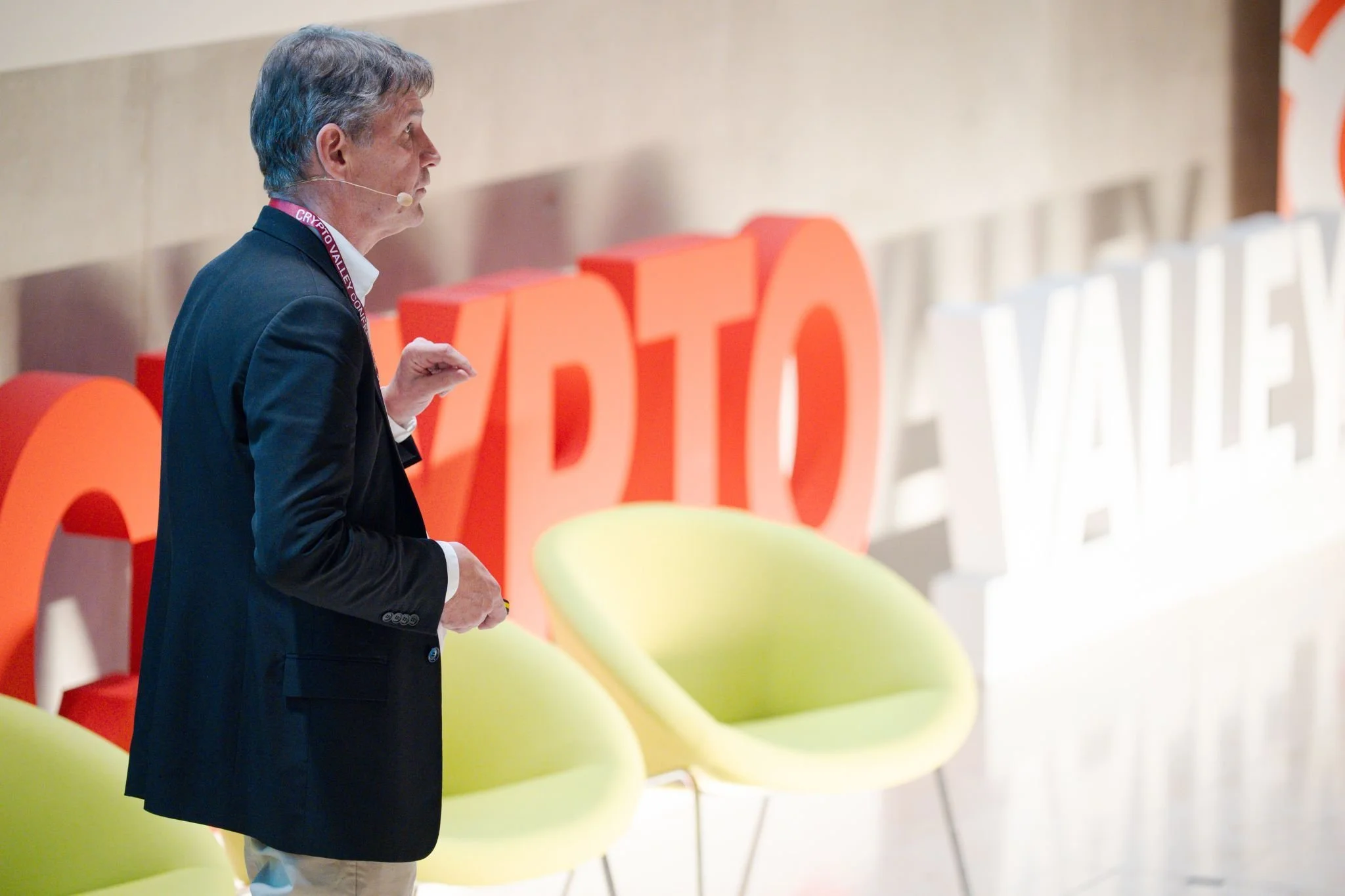
We joined UK trade delegations to Nigeria and Kenya alongside Mayor of London, Sadiq Khan, showcasing our solutions to financial services, tech companies, and governments in markets where digital infrastructure is expanding rapidly. Richard Hoptroff presented at ITSF in Prague and the Crypto Valley Conference, sharing our timing innovations with those at the forefront of financial technology and digital infrastructure.
Looking Ahead to 2026
The geopolitical instability and cyber threats that defined the year show no signs of diminishing. In 2026, the stakes for maintaining accurate, resilient timing will only increase.
But 2025 also revealed something important. Organisations are no longer waiting for crises to force their hand. They're proactively building resilience and investing in diversified time sources to withstand disruption before it occurs.
As AI systems grow more sophisticated and demanding, and autonomous systems proliferate across transport and logistics, the precision and resilience of timing infrastructure will only become more critical to operations.
On behalf of everyone at Hoptroff, we look forward to 2026. A big thank you to our clients and partners for your continued collaboration and inspiration.