
Hoptroff News and Market Insights
Read expert advice and the latest updates in the world of precision timing

Detection Is Not Enough: Why Financial Institutions Need GNSS-Resilient Timing by Design
A NIST-commissioned study puts GPS at 1.4 trillion dollars in US economic benefits, with finance named as a key sector. A 30-day outage would cost approximately one billion dollars per day. For a financial institution in a live trading session, that cost begins in the first minutes, before any detection system can respond. Hoptroff explains why resilient timing architecture has to come before detection, and what that looks like in practice across a financial estate.
Why Financial Institutions Need a Terrestrial Time Source
When a bank's satellite time sources are compromised and say it's 1970, an independent terrestrial clock is what lets the system know which signal to trust. For banks, HFTs, and financial institutions operating under DORA, ISO 27001, and Executive Order 13905, a terrestrial time source is no longer optional. Hoptroff explains the risks of satellite-only timing and the five reasons the market is moving this way.

Why Exchanges Can't Treat Time as an Afterthought
Timing infrastructure only gets attention when it breaks or when growth outpaces it. Both are happening across exchanges right now. Market structure, colocation complexity, and regulation have all caught up simultaneously and the GPS antenna on the roof is no longer sufficient to meet any of them.

Timing the Token Factory:
In the inference era, tokens per watt is the metric that sets the revenue ceiling of every AI data centre. Microsecond clock drift across GPU nodes quietly erodes that figure through idle leakage power. Peter Tomfohrde and Richard Hoptroff explain why precision timing is now a first-class AI infrastructure decision.
The 24/7 Market Never Sleeps, But Who’s Watching the Clocks?
The overnight maintenance window has been the safety valve of financial infrastructure for decades. Continuous trading is closing it permanently. Hoptroff explains the three timing risks C-suite leaders must address, and the questions to ask their infrastructure teams before the first overnight session goes live.

Relative Time vs. UTC: Why Both Matter
There are two very different answers to the question ‘What time is it?’ UTC absolute time and relative time. As distributed systems, AI infrastructure, and financial platforms push into nanosecond and picosecond territory, understanding both is becoming a strategic necessity. Hoptroff explains the difference and why modern timing systems must deliver both.

The Race Below the Nanosecond
A 3.2-nanosecond trading edge is now worth hundreds of millions of dollars, and a regulatory exposure under 200+ overlapping rules. Hoptroff explains why sub-nanosecond, UTC-traceable, vendor-agnostic timing has become a single strategic necessity for financial institutions.
Timing Under Interference - What's Your Backup?
GPS spoofing surged 500% in 2024. A single-day outage costs $1.6 billion. For financial services, telecoms and trading, single-source GPS timing is no longer a risk you can ignore. Hoptroff explains what a real backup looks like.

Your AI Infrastructure Has a Timing Problem
Unsynchronised clocks are stalling the world's fastest GPUs and costing AI infrastructure money. Hoptroff explains the timing problem nobody is measuring, and why no one is taking responsibility for it.
Traceable Time In The Cloud
Cloud infrastructure may appear efficient, but without precise, traceable time, systems drift silently. In distributed environments, synchronisation isn’t enough, it must be provable.

Time Is Not a Commodity
Time is often assumed to be reliable, but in modern infrastructure, that assumption creates risk. Without traceability and control, timing becomes fragile, unverifiable, and non-compliant.
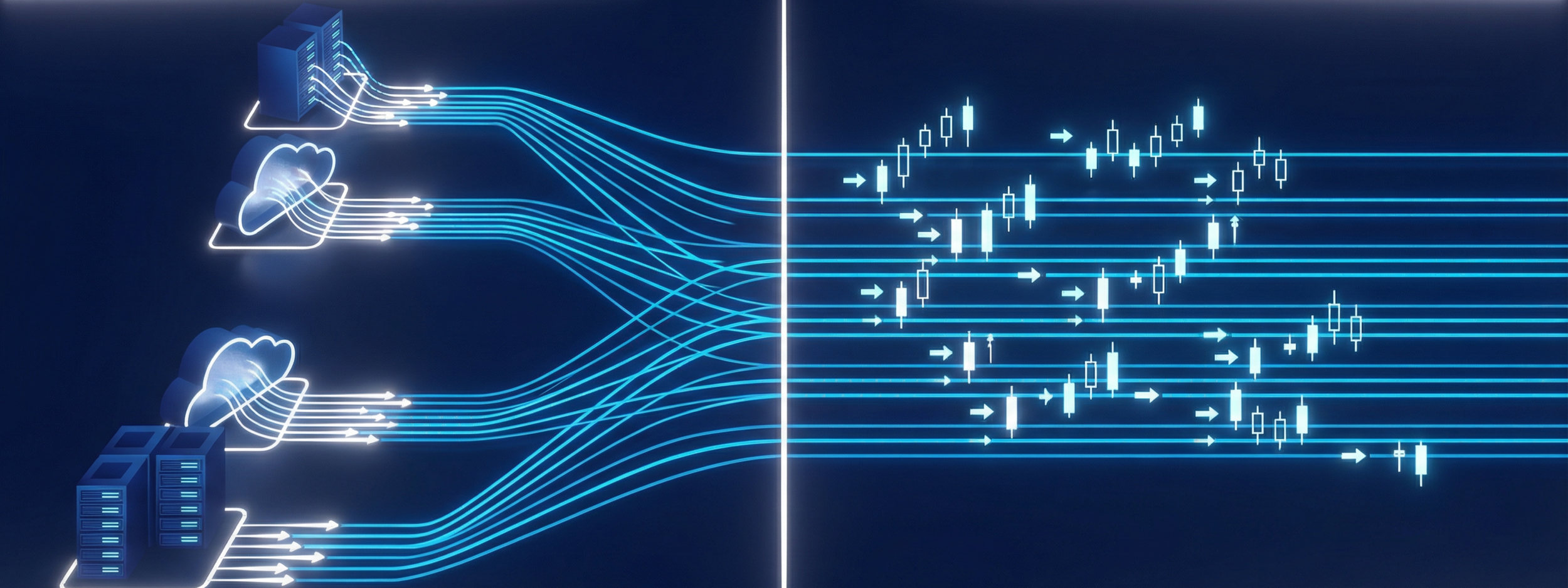
When Cloud Migration Exposes Discrepancies
Cloud migration can introduce hidden risks. When time isn’t treated as infrastructure, systems drift, audit trails lose integrity, and regulatory compliance becomes difficult to prove.
Timing Implications for AI Infrastructure
AI performance isn’t always limited by compute power. In distributed AI systems, poor synchronization causes queues, latency spikes, and idle infrastructure. Timing is no longer just a diagnostic metric; it’s becoming part of the architecture.
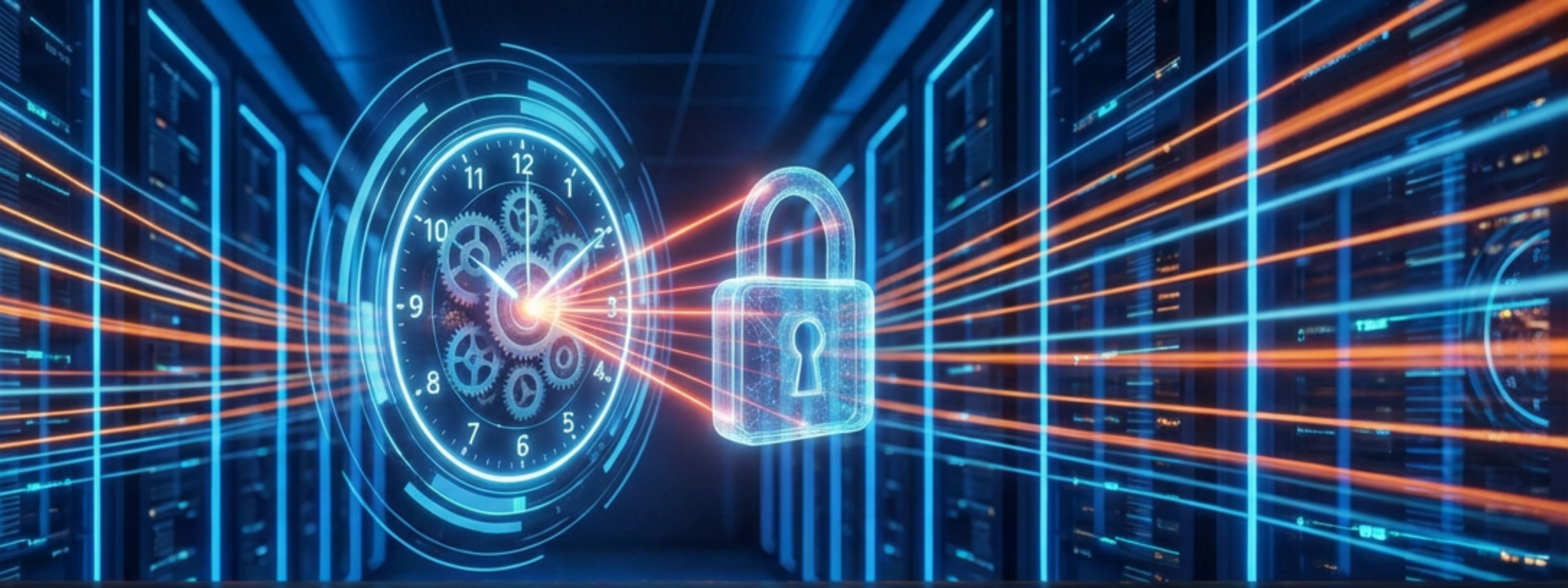
Precision Timing and the New Arms Race in Market Integrity
As trading compresses into nanosecond bursts across global venues, the challenge is no longer latency, it is observability. When events occur 3.2 nanoseconds apart, deterministic ordering becomes dependent on clock integrity.

Hoptroff Further Strengthens Executive Team With New Chief Operating Officer
We’ve welcomed Paul Birkin as Chief Operating Officer, strengthening Hoptroff’s operational leadership as we scale globally and deepen our delivery capabilities.
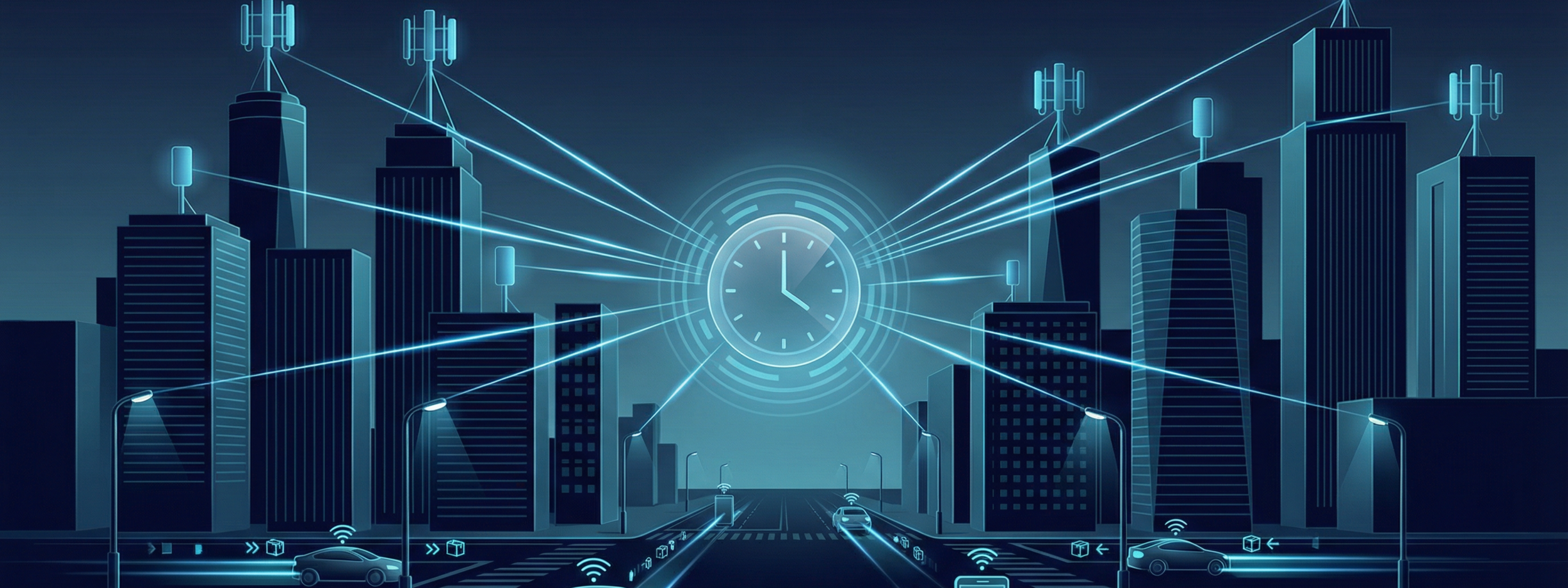
Unlocking 5G’s Full Potential: Why Precision Timing Is the Missing Link
5G performance depends on precise synchronisation. Learn why ±130-nanosecond timing accuracy underpins advanced features, and why resilient, GNSS-independent time is becoming critical network infrastructure.
Exchanges and Market Platforms Are Operating at Nanosecond Time
In modern electronic markets, time is no longer a background technical detail. As exchanges and market platforms move to nanosecond-level timestamps, the ability to order, analyse, and defend market events now depends on high-resolution, UTC-traceable time.

The Cinderella Utility - Why time is the silent pillar of modern infrastructure
Time is the invisible infrastructure behind digital trust. As GPS vulnerabilities grow and regulations tighten, organisations must rethink how they secure, audit, and govern time across critical systems.

Hoptroff Wrapped: 2025 in Review
Time is the invisible foundation holding our digital world economy together. In 2025, that foundation came under serious pressure.

Delivering Traceable Time in the Cloud: Hoptroff and IBM Collaborate on Reliable Time Synchronisation
Hoptroff is partnering with IBM to bring accurate, traceable time to cloud and hybrid environments.